Asbestos is the generic name for 6 different naturally-occurring fibrous minerals. A “fibre“ is defined as a particle that is more than 5 micrometres (μm) in length and having a length to width ratio of at least 3:1.
Based on their physical and chemical properties, there are two major groups of asbestos: serpentine and amphibole.
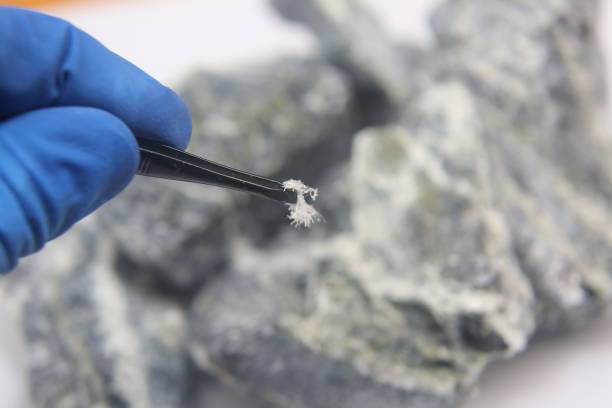
Serpentine
Serpentine fibres are long, flexible and curved. These fibres can be woven together. The main type of serpentine asbestos is chrysotile (white asbestos), which is the main type of asbestos used in manufacturing.
Amphibole
Amphibole fibres are straight and stiff. These fibres are generally brittle and rod- or needle-shaped, which limits their commercial usefulness. There are 5 sub-types of amphiobole asbestos, including:
• Crocidolite (blue asbestos)
• Amosite (brown asbestos)
• Actinolite
• Anthophyllite
Because it has heat-resistant and insulating properties, asbestos was used in a wide range of manufactured products. Before 1990, asbestos was mainly used for insulating buildings and homes against cold weather and noise, and for fireproofing. Asbestos was used by industry, construction, and commercial sectors in products such as:
- Building materials (roofing sheeting, roof sealants, ceiling and floor tiles,fascias, barge boards, eaves, paper products and felts, house siding, and asbestos-containing cement and plaster products).
- Friction materials (automobile clutch pads, brake linings, pads and shoes, and transmission parts).
- Fire and heat protection wear.
- Industrial furnaces and heating systems.
- Asbestos textiles (fabrics).
- Heat, electrical, and sound insulation or wrappings.
- Insulation for hot and cold areas.
- Packing materials, gaskets, linings, and coatings.
- Reinforcement of plastic products, thermoset and thermoplastic resins.
- Filler in resins, plastics and caulking and in asphalt road surfacing.
OHMS Pty Ltd carries out asbestos assessments according to the Asbestos Abatement Regulations, 2020. (Occupational Health & Safety Act, Act 85 of 1993). From the asbestos assessment, an inventory will be drafted. Asbestos assessments are carried out to determine the following:
- The location and condition of all asbestos containing materials.
- The likelihood and potential to release asbestos fibres into the atmosphere.
- The potential of personal asbestos fibre exposure.
- To ensure compliance with the Asbestos Abatement Regulations, 2020 and the Environmental Asbestos Regulations, 2007.
Read more about out Asbestos Bulk Analysis Service
Asbestos Air Monitoring
Asbestos in air monitoring is the only way to quantify asbestos in air concentrations. This is done by air drawn through a 25mm mixed cellulose esther membrane (MCE) filter. The filter is then analysed by phase contrast microscopy (PCM) to determine the airborne asbestos concentrations.
OHMS Pty Ltd offers the following services:
- Asbestos risk assessment & inventory
- Drafting asbestos plans for asbestos removal projects.
- Approval of asbestos plans.
- Notification to the Department of Labour (DoL) of intention to remove asbestos containing materials.
- Air monitoring (Background, during removal (personal & static), clearance and re-assurance)
- Air sample analysis (counting of asbestos fibres)*
- Bulk sample analysis (to determine if a material contains asbestos)*
* The asbestos air and bulk sample analysis are carried out in the OHMS Pty Ltd Occupational Hygiene laboratory. The asbestos air and bulk sample analysis are carried out according to HSG 248, The analysts’ guide for sampling, analysis and clearance procedures.
Read more about out Asbestos Air Monitoring Analysis Service
Laboratory and Analytical Services
Our range of services include:
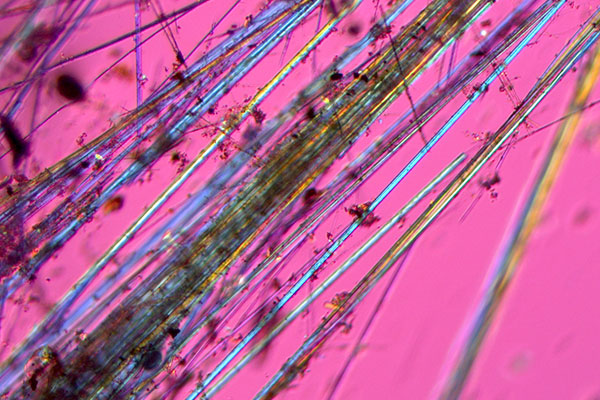
- Identification of asbestos in bulk asbestos containing materials
- Evaluation of asbestos fibers in air by Phase Contrast Microscopy (PCM) in accordance with HSG248
- Gravimetric analysis of airborne dust and fumes
- Chemical analysis of air, water and soil
- Microbiological analysis of air, water and soil for pathological organisms
We offer analysis requests as a service:
- Asbestos air sample (category)
- Asbestos bulk sample (category)
Regulation and Standards:
- Occupational Health and Safety act, 1993, Act 85 of 1993
- Asbestos Abatement Regulations, 2020
- HSG248: Asbestos: The Analysts’ Guide