Hazardous Chemical Agents (SANAS Accredited)
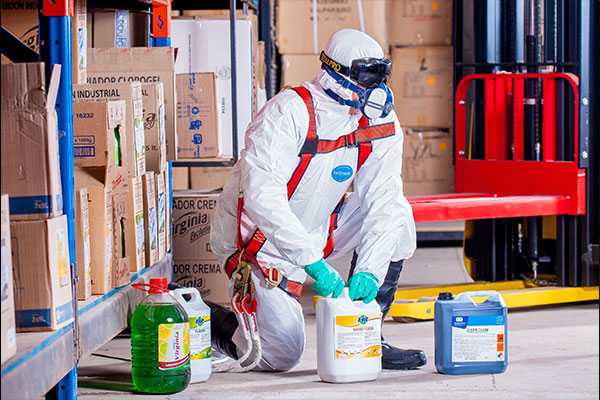
Hazardous Chemical agents monitoring refers to air sampling used to quantify concentrations of a particulate, vapour, gas, mist, or aerosol to which an employee is exposed during a work shift.
Samples are typically taken over an 8-hour period or may be shift based. These measured concentrations are then compared to the Occupational Exposure Limit (OEL) (a limit that is governed by legislation) to determine if employees are overexposed to the chemical agent in question. These sample results will be used to determine if the chemical agent poses a risk for developing occupational disease and for us to make suitable recommendations regarding risk control measures.
The primary purpose of hazardous chemical substances sampling is to protect workers’ health by measuring personal exposure to contaminants resulting from the work environment or general work activities and processes.
Regulation and Standards:
- Occupational Health and Safety act, 1993, Act 85 of 1993.
- Regulations for Hazardous Chemical Agents, 2020.
- General Safety Regulations, 1986.
- OESSM: Occupational exposure Sampling Strategy Manual. Published by the National Institute for Occupational Safety and Health (NIOSH).
- HSG- 173, United States of America, Dept of Health, Education and Welfare.
- NIOSH – The national institute for occupational safety and health.